Graft Material Used: 100% Ivory Dentin Graft
Application: Socket preservation after extraction of tooth 11, covered with Free Gingival Graft (FGG) from the tuberosity.
Performed by: Dr. Avi Kuperschlag
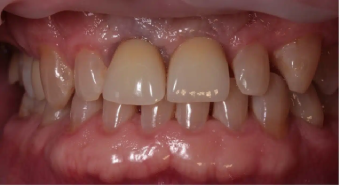
A frontal clinical image showing the anterior maxilla prior to treatment. Tooth 11 is present but non-restorable, with aesthetic and functional concerns. The surrounding gingival architecture appears healthy, making the case suitable for extraction and socket preservation in preparation for implant placement.
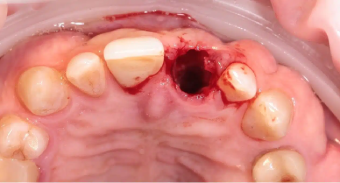
Tooth 11 was atraumatically extracted. Examination of the socket confirmed intact bony walls and adequate vascularity, making the site suitable for grafting.
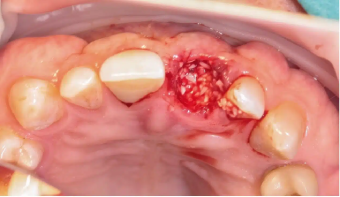
Ivory Dentin Graft was placed into the socket to preserve alveolar ridge dimensions and promote natural bone regeneration.
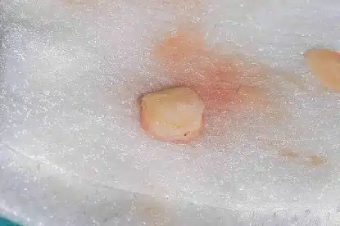
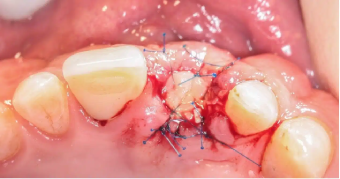
A soft tissue graft was harvested from the tuberosity area and used to cover the grafted socket, providing stability and soft tissue closure.
The site was sealed with the FGG and secured with sutures. A membrane could also be used as an alternative to soft tissue grafts for socket coverage.
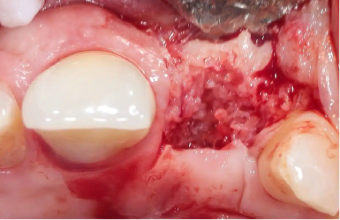
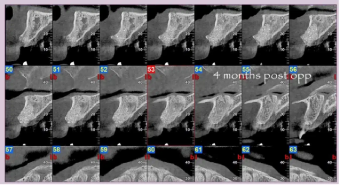
Re-entry at 4 months revealed mature, regenerated bone with excellent integration of the graft, supporting ideal conditions for implant placement.
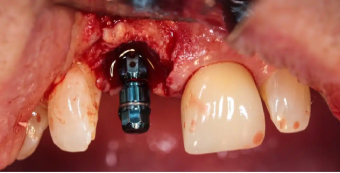
A dental implant was placed with high primary stability, allowing immediate loading. The regenerated ridge fully supported the implant body.
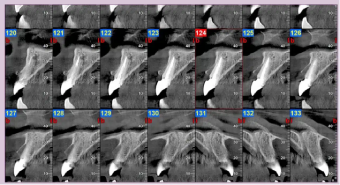
CBCT showing the compromised condition of the alveolar ridge and root of tooth 11 prior to extraction and grafting.
CBCT 4 months post operation - The excellent integration of Ivory graft allowed the implant to be placed with high primary stability allowing immediate loading.
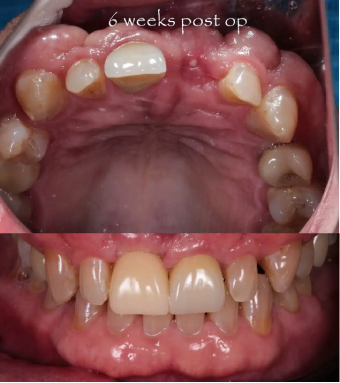
The combination of Ivory Dentin Graft and a free gingival graft from the tuberosity provided an effective socket preservation approach. At 4 months post-op, the regenerated site supported immediate implant loading with high primary stability — demonstrating a predictable, patient-friendly approach to anterior implant rehabilitation.