FAQ – IvoryGraft™
Everything you need to know about our dentin-based biomaterial, its applications, and clinical performance.
Everything you need to know about our dentin-based biomaterial, its applications, and clinical performance.
Find Answers to your Questions
Our specially designed manufacturing process assures all our products are clean from any pathogen agents.
All biocompatibility testing conducted on Ivory Dentin Graft™ has concluded it can be regarded as safe. The final sterility of Ivory Dentin Graft is ensured by gamma irradiation.
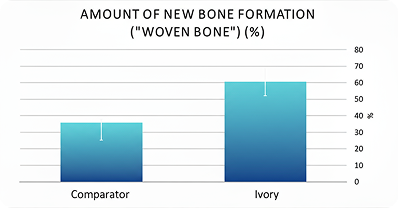
Clinically proven to accelerate new bone formation and promote early integration — helping achieve stronger, faster grafting results.
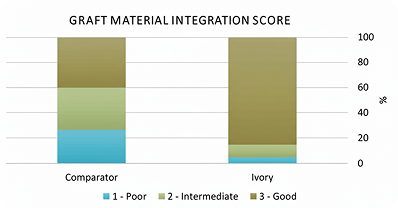
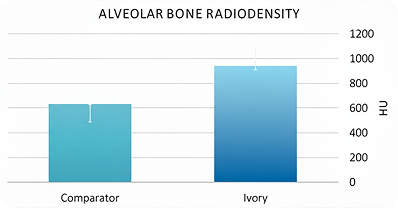
Superior to comparator porcine-derived grafts.
Promotes seamless bonding between graft and host bone, enhancing cellular activity and natural regeneration for long-lasting stability.
Ivory Dentin Graft™ particles are stored as dried un-compacted granules. Ivory Dentin Graft™ allows easy and comfortable packing within the alveolar space following hydration of the graft.
Ivory Dentin Graft comes in both vials and syringes, facilitating clinician’s preferred method of use.
Ivory Dentin Graft™ forms intimate contact (strong fusion) with the host bone tissue and thus supports long-term implant stability and allows superior mechanical strength.
Evaluation of the Ivory Dentin Graft™ Device
Ivory Dentin Graft provides an excellent microenvironment for bone ingrowth and successful osteogenic activity
Find answers to your Questions
A bone graft is a procedure that replaces and regenerates lost bone, and can also restore proper facial contour. If teeth have been lost due to trauma, rot and decay, or injury, some bone loss often occurs, and the bone around the jaw will begin to deteriorate
Extractions without the use of bone grafting will result in shrinkage of bone and gums, however these changes can be prevented by incorporating bone grafting material into the extraction sites.
If bone has been lost in your jaw, this procedure will help. Without the bone, you cannot receive dental implants. There are a number of reasons why a patient would need to have this type of procedure done. The biggest reason is due to gum disease. Many adults suffer from gum disease and they do not even know it. This is why it is so important for you to receive a routine dental checkup. When gum disease is not treated properly your jaw may even become misshapen as well due to adjustments and facial shifts when the bone is gone.
The bone grafting procedure is a routine procedure that is considered to be quite painless. Patients who do fear the procedure should not be afraid to explore their options and consider it. The procedure is not as bad as it sounds. In fact, this procedure is very beneficial to patients and can help them smile boldly once again. In addition to the benefits, there are always risks that come along with any procedure. While the risks are considered to be minimal at best, you still need to know about them to protect and prepare yourself.
The first risk associated with the procedure is that the bone graft will be rejected. It is not common and is unlikely to happen, but it could. In that case you will need to have the procedure performed again and you may need to seek out an alternative treatment.
Lastly, as in any other surgical procedure you might need to worry about swelling, infection, and bleeding once the procedure has been performed. If you ever feel like the symptoms have worsened, it is time to call your treating dentist.
By avoiding foods that may require chewing, patients can speed up their healing process. No matter what, during the first two to three weeks following surgery, it’s important to avoid eating hard, crunchy, or sharp foods so that they don’t get stuck in the graft site.
Ivory Dentin Graft™ is contraindicated under the following conditions: In the presence of acute inflammation, in patients with known or suspected hypersensitivity or allergy to porcine products and in patients affected by immunological disorders.
Some of the following relative contraindications should be discussed with your dentist: Serious bone diseases, Serious disturbances of bone metabolism, Ongoing treatment with glucocorticoids, mineralocorticoids or with agents affecting calcium metabolism (e.g., calcitonin), Severe or difficult to control diabetes mellitus, Irradiation therapy, chemotherapy or immunosuppressive therapy in the last 5 years and malignancies.